Shape a Beard Neckline the Right Way for a Cleaner More Defined Beard
Learning how to shape a beard neckline can make the difference between a beard that looks intentionally groomed and one that appears unfinished. Even if the beard itself is thick, healthy, and well-maintained, an uneven or incorrectly positioned neckline can affect the overall shape of your face.
The goal is not simply to remove hair from the neck. A good beard neckline creates a natural boundary between your beard and your neck while supporting the length, density, and style of your facial hair. Whether you maintain your beard at home or prefer professional grooming, understanding where the neckline should sit helps you achieve a cleaner and more balanced result.
At Old Fashioned Barbershop in Stockholm, beard shaping is approached as part of the complete grooming process rather than simply trimming stray hairs.
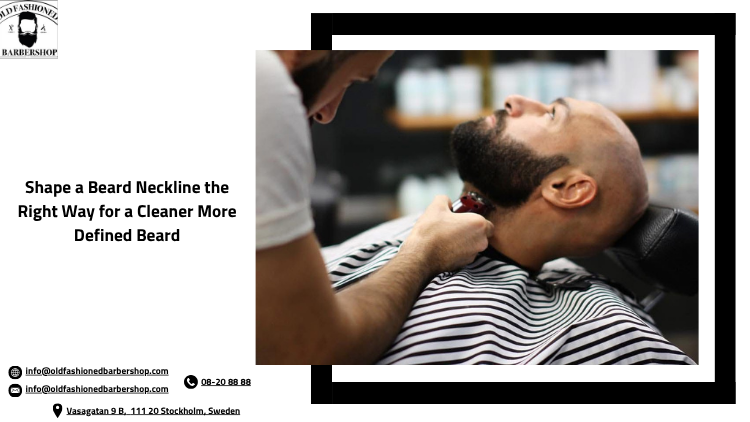
What Is a Beard Neckline?
The beard neckline is the lower boundary of your beard, usually running from one side of the jaw toward the area above the Adam's apple and continuing toward the opposite side.
It defines where your beard ends and your neck begins.
A well-shaped neckline should look clean without appearing artificially high. When placed correctly, it supports the jawline and allows the beard to maintain enough weight underneath the chin.
One of the biggest mistakes men make when they shape a beard neckline is assuming that the line should follow the jaw itself. In most cases, trimming directly along the jawline removes too much hair and can make the beard look narrow or disconnected from the face.
Where Should Your Beard Neckline Be?
There is no single measurement that works perfectly for every man because beard growth, neck length, jaw structure, and beard style are different.
However, a practical starting point is to locate the area approximately one or two fingers above your Adam's apple.
From this central point, imagine a smooth curved line extending toward the area behind each jaw.
The line should not be completely straight. A slight natural curve usually creates a softer and more balanced appearance.
When deciding how to shape a beard neckline, look at your beard from the front and both sides rather than relying only on the bathroom mirror from one angle. What looks straight from the front may appear uneven when viewed from the side.
How to Shape a Beard Neckline Correctly
If you want to know how to shape a beard neckline without removing too much hair, work gradually. Taking away a small amount at a time is much easier to correct than cutting the neckline too high.
1. Let Your Beard Grow Before Creating the Line
Avoid defining the neckline too aggressively during the first few days of beard growth. Allowing enough growth gives you a better idea of your natural density and the direction in which your facial hair develops.
Short stubble can make it difficult to determine where the beard should naturally end.
Once the beard has developed enough coverage, you can create a line that complements its natural growth instead of forcing a shape too early.
2. Find the Lowest Point Under Your Chin
Stand naturally and keep your head in a normal position.
Locate your Adam's apple and move slightly upward. The lowest point of the neckline will usually sit somewhere in this area rather than directly underneath your jaw.
This is an important step when you shape a beard neckline because starting too high can remove the fullness that visually strengthens the chin and jaw.
3. Imagine a Curve Toward Each Ear
From the central point, imagine a gentle curved line extending toward the back of the jaw on both sides.
Do not create an extremely sharp U-shape or a perfectly horizontal line.
A natural curve generally follows the architecture of the beard more effectively and gives the neckline a professional appearance.
4. Trim Below the Line First
Before creating a sharp edge, shorten the hair below your intended neckline.
Using a beard trimmer with a guard can help reduce bulk without immediately committing to the final line.
Working this way gives you a chance to reassess the shape before removing the remaining hair.
5. Define the Neckline Carefully
Once you are satisfied with the position, remove the remaining hair below the line using your preferred trimmer or shaving method.
Move slowly from the center toward each side.
Check your work regularly rather than trying to create the entire neckline in one continuous movement.
6. Check Both Sides
Beards are rarely perfectly symmetrical, so your goal should be visual balance rather than mathematical perfection.
Stand back from the mirror and compare both sides.
Minor differences in natural hair growth are normal. Removing additional hair simply to achieve exact symmetry can sometimes make the result worse.
The Best Way to Shape Beard Hair Without Over-Trimming
The best way to shape beard growth is to work with what your beard naturally gives you.
Many grooming mistakes happen because someone tries to force the beard into a shape that does not suit its density or growth direction.
If your beard grows particularly thick under the chin, that fullness can help strengthen the appearance of the jaw. Removing too much hair from this area may reduce that effect.
On the other hand, if the growth on the upper neck is patchy, a slightly more defined neckline can create a cleaner transition.
The correct technique depends on your individual beard rather than copying an exact line from someone else's photograph.
How High Is Too High for a Beard Neckline?
One of the clearest signs that a neckline has been trimmed too high is a visible gap between the beard under the chin and the neck.
From the side, the beard may appear to stop directly at the jawbone.
From the front, the lower portion of the beard can look thinner than intended.
When you shape a beard neckline, remember that the line should support the beard rather than expose the entire underside of the jaw.
A neckline positioned slightly lower is usually easier to adjust later. Once you shave too high, the only real solution is to allow the hair to grow back.
Should the Neckline Change With Beard Length?
Yes. Beard length plays an important role in deciding how visible or defined the neckline needs to be.
Short Beards
With short facial hair, the neckline is usually more visible. A clean edge can therefore have a significant effect on the overall appearance.
Short beards often benefit from more frequent maintenance because small amounts of neck growth can quickly soften the line.
Medium-Length Beards
Medium beards allow slightly more flexibility. The neckline still provides structure, but the additional hair underneath the chin begins to cover part of the transition.
This is often where professional beard trim techniques become especially useful because the barber must balance the lower beard shape with the neckline.
Long Beards
With longer beards, the neckline may become almost invisible from the front.
However, it still matters. Removing excessive hair underneath can reduce volume and change the way the beard hangs.
For longer styles, controlling bulk is often more important than creating an extremely sharp visible line.
Beard Neckline and Face Shape
Face shape can influence how you should shape a beard neckline, although the neckline should never be used in isolation.
The entire beard shape matters.
Round Faces
Men with rounder faces may benefit from maintaining more length underneath the chin while keeping the sides controlled. This can visually lengthen the face.
Trimming the neckline too high can remove some of that useful lower volume.
Square Faces
A naturally strong jaw can work well with either structured or slightly softer beard shapes.
The neckline should reinforce the jaw without creating an exaggerated horizontal boundary.
Oval Faces
Oval face shapes generally work with many beard styles. The focus should be on maintaining balance between the cheeks, chin, sideburns, and neckline.
Longer Faces
A very long beard underneath the chin can visually lengthen the face even further. Controlling the lower shape while maintaining a natural neckline can help create better proportions.
Common Beard Neckline Mistakes
Knowing how to shape a beard neckline also means understanding the mistakes that can make an otherwise well-groomed beard look uneven or poorly balanced. Most problems happen when too much hair is removed, the neckline is placed too high, or the shape is created without considering how the beard looks from different angles.
Shaving Directly Along the Jaw
One of the most common mistakes is treating the jawline and beard neckline as the same thing. Shaving directly along the jaw can remove too much fullness from underneath the chin, making the beard look thinner and less natural from the side. A well-positioned neckline should normally sit below the jaw and support the overall shape of the beard rather than expose the entire underside of it.
Creating an Extremely Straight Line
A completely straight neckline can look artificial because the lower edge of the beard naturally follows the curves of the neck and jaw. Instead of trying to create a perfectly horizontal line, aim for a gentle curve that connects both sides naturally. This usually produces a cleaner result while still keeping the beard looking balanced and intentional.
Trimming Too Much at Once
Another common mistake is trying to achieve the final shape in a single pass. When you shape a beard neckline, it is safer to remove small amounts of hair and check the result as you go. Starting conservatively gives you room to make adjustments, while cutting too high or too deeply can only be corrected by waiting for the hair to grow back.
Ignoring How the Beard Looks From the Side
A neckline that appears even when viewed from the front can look completely different from the side. One edge may rise higher than the other, or the line may become too steep as it approaches the jaw. Checking your beard from the front, both sides, and slightly underneath helps you maintain a more consistent and natural shape.
Trying to Create Perfect Symmetry
Natural beard growth is rarely identical on both sides of the face, so perfect symmetry should not be the main goal. Constantly trimming one side to match the other can gradually shorten both sides and distort the original shape. Focus instead on visual balance and a neckline that complements your beard, jaw, and face shape as a whole.
How Often Should You Trim Your Beard Neckline?
The ideal frequency depends on how fast your facial hair grows and how polished you want the beard to look.
Men with short beards may tidy the neckline every few days. Medium or longer beards may require less frequent definition.
A professional beard trim does not necessarily mean creating a completely new neckline every visit. Often, the barber simply restores the existing structure while adjusting the beard around it.
If you notice that the lower edge has become difficult to identify, it may be time to redefine the shape.
Beard Neckline Versus Cheek Line
The neckline controls the lower edge of the beard, while the cheek line defines the upper boundary.
They should work together.
A very sharp cheek line combined with an extremely natural neckline can sometimes feel inconsistent. Likewise, an aggressively defined neckline may look out of place if the rest of the beard is intentionally soft and natural.
The most successful beard shaping considers the entire facial hair design rather than treating each line separately.
Should You Use a Razor or Trimmer?
Both tools can work, but they create slightly different finishes.
A trimmer is practical for removing bulk and creating the initial boundary. It is also useful when you want a slightly softer neckline.
A razor creates a cleaner contrast between the beard and the shaved neck.
Some men prefer combining both methods by trimming first and shaving below the final line afterward.
Whatever tool you use, avoid repeatedly going over the same area, especially if your skin becomes irritated easily.
Preparing the Skin Before Neckline Shaving
If you intend to shave below the neckline, preparing the skin can make the process more comfortable.
Warm water can soften facial hair and help prepare the shaving area. This is one reason traditional barbering often incorporates warm towels into shaving services.
A barber hot towel shave combines beard preparation, shaving technique, and post-shave care in a controlled grooming process.
However, hot towel shaving should complement beard styling rather than determine where your neckline sits. The beard shape should always be established first.
Looking After the Skin Under Your Beard
The skin beneath your beard still needs attention.
Regular cleansing helps remove oil, dead skin, and product buildup. Depending on your skin type, a suitable moisturizer can also help reduce dryness after trimming or shaving.
Avoid applying excessive styling product directly onto the freshly shaved neck, particularly if the skin is sensitive.
Keeping your trimmer and grooming tools clean is equally important because dirty blades can contribute to irritation.
Combining a Beard Trim With a Haircut
A beard usually looks best when it works together with the haircut.
The transition between the sideburns, beard, cheeks, and neckline affects the overall balance of the face.
A beard and hair trim allows both areas to be shaped as one complete style rather than treating the haircut and beard separately.
For example, a tight fade may require a more controlled transition into the beard, while a classic haircut can work well with a fuller, more traditional beard shape.
This is also why men searching for hair and beard Stockholm services often benefit from having both completed during the same appointment.
When Should You Visit a Professional Barber?
Maintaining your neckline at home is possible, but professional help can be useful when establishing the initial shape.
A barber can assess your natural beard growth, face proportions, hair density, and preferred style before deciding where the neckline should sit.
This is particularly useful if you have previously trimmed the line too high or if one side of your beard grows differently from the other.
If you are looking for a professional beard trim Stockholm service, the goal should not simply be to remove hair. A good barber should consider how the beard works with your jaw, haircut, sideburns, and overall style.
Once the structure has been established professionally, maintaining it between appointments becomes much easier.
How to Keep Your Beard Neckline Looking Sharp
After you successfully shape a beard neckline, maintenance should be relatively simple.
Use the existing line as your guide rather than recreating it every time you trim. Remove new growth below the boundary and avoid gradually moving the line higher at every grooming session.
Comb or brush the beard before trimming so the hairs sit in their natural direction.
Keep your grooming tools clean and sharp, and inspect the neckline under good lighting.
Most importantly, allow enough beard underneath the chin to maintain the shape and fullness of your chosen style.
Professional Beard Grooming at Old Fashioned Barbershop
A strong beard style is created through proportion, not simply shorter hair and sharper lines.
At Old Fashioned Barbershop in Stockholm, beard grooming can be combined with haircutting and traditional barbering techniques to create a complete look that suits your facial structure and personal style.
Whether you need help establishing your neckline, maintaining your existing beard, or combining a haircut with professional best beard trimming techniques, having the beard assessed as a whole can produce a more natural and refined result.
If you have been trying to shape a beard neckline yourself but cannot find the right position, a professional barber can establish the structure so it becomes easier to maintain at home.
Ready to give your beard a cleaner, more defined shape? Visit Old Fashioned Barbershop in Stockholm for professional beard grooming tailored to your face and style. Contact us today to book your appointment.
Frequently Asked Questions
How do I know where my beard neckline should be?
A useful starting point is approximately one or two fingers above the Adam's apple. From there, imagine a gentle curve moving toward both sides of the jaw. The exact position will depend on your face, beard density, and beard length.
Should my beard neckline follow my jawline?
Usually not. Shaving directly along the jawline often places the neckline too high and removes important fullness underneath the chin. The neckline should generally sit below the jaw.
What is the best way to shape beard neckline hair?
The best way to shape beard neckline hair is to establish the lowest central point first, create a gentle curve toward both sides, and gradually remove the hair below that line. Avoid taking off too much at once.
How often should I shape a beard neckline?
Short beards may need neckline maintenance every few days, while longer beards can often go longer between cleanups. Your natural growth rate and preferred level of definition will determine the ideal schedule.
Can I use a beard trimmer for the neckline?
Yes. A beard trimmer is useful both for reducing bulk and defining the neckline. A razor can then be used below the line if you prefer a cleaner finish.
What happens if I trim my beard neckline too high?
The beard may look thin underneath the chin or appear disconnected from the neck. If this happens, the best solution is usually to allow the area to grow back before reshaping it.
Should long beards have a neckline?
Yes, although the neckline may be less visible. Maintaining some structure underneath prevents excessive neck growth while preserving enough hair to support the fullness of the beard.
Is professional beard trimming better than trimming at home?
Both can work. Home maintenance is practical once you know the correct shape, while professional best beard trimming can be particularly helpful when establishing the initial neckline or correcting an uneven beard.
Can I book a haircut and beard trim together?
Yes. Combining a haircut with a beard and hair trim allows the barber to balance the haircut, sideburns, beard length, cheek lines, and neckline as one complete style.
Where can I get a beard trim in Stockholm?
If you are looking for a professional beard trim Stockholm service, Old Fashioned Barbershop offers traditional men's grooming in central Stockholm. A barber can assess your beard growth and create a neckline that complements both your facial structure and haircut.
