Haircut and Beard Trim Stockholm: A Complete Guide to a Sharper Style
A haircut can look technically correct, and a beard can be neatly shortened, yet the final result may still feel incomplete. That usually happens when the hair and beard are treated as two separate grooming tasks rather than two connected parts of the same appearance. The proportions, lines, texture, volume, and transition between them should work together.
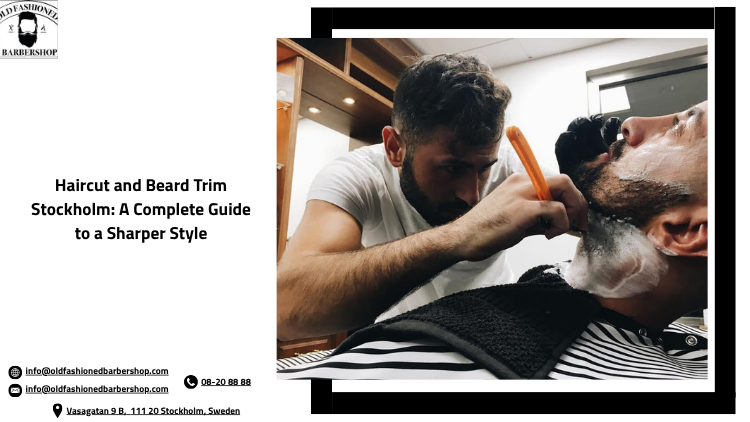
Choosing a professional Haircut and Beard Trim Stockholm service allows you to build one balanced look rather than simply receiving two unrelated trims. Your haircut can be shaped around your face, hair type, routine, and personal style, while your beard can be adjusted to complement the haircut and strengthen your facial structure.
At Old Fashioned Barbershop, grooming is approached with attention to detail. A successful appointment should not begin with the first clipper stroke. It should start with a conversation about what you want, what suits you, how much maintenance you are willing to do, and how your current hair and beard can be improved.
Some clients want a clean, professional appearance. Others prefer a sharp fade, a fuller beard, a traditional haircut, or a more relaxed Scandinavian look. The goal is not to force every client into the same trend. It is to create a result that looks intentional, feels comfortable, and remains manageable after leaving the barber chair.
Whether you need a complete transformation, a regular beard trim Stockholm appointment, or coordinated hair and beard Stockholm grooming before an important event, the quality of the result depends on planning, technique, and finishing. This guide explains how a combined service works, how to select a suitable style, what professional beard shaping involves, and how to maintain your appearance between visits.
Why Hair and Beard Grooming Should Be Planned Together
Hair and facial hair frame different parts of the face, but they influence one another visually. A haircut adds height, width, shape, and movement around the upper part of the head. A beard adds definition, weight, and structure around the jaw, cheeks, mouth, and chin.
When these areas are planned separately, the proportions may compete. For example, a very tight haircut combined with an unnecessarily bulky beard can make the lower half of the face appear heavy. A high-volume hairstyle paired with an extremely narrow beard may create the opposite problem. Neither choice is automatically wrong, but the relationship between them should be deliberate.
A professional Haircut and Beard Trim Stockholm appointment considers the overall silhouette. The barber studies how the sideburns connect to the beard, how much weight should remain around the jaw, how the beard neckline should be positioned, and whether the haircut needs a soft or defined finish.
This coordination is particularly important when the hair and beard have different densities. A client may have thick scalp hair and a lighter beard, or a full beard with thinning hair around the temples. An experienced barber can use proportion and visual balance to make these differences less noticeable.
The service is not limited to shortening hair. A considered beard and hair trim may include reshaping uneven growth, adjusting the side profile, cleaning the cheek and neck areas, reducing unnecessary bulk, and styling the haircut so it works naturally with the beard.
The result should look unified from the front, side, and back. It should also suit the client when viewed at conversational distance, not only under bright barbershop lighting.
What Makes a Combined Appointment Different?
A standard haircut usually concentrates on the length, outline, graduation, texture, and finish of the hair. A beard appointment focuses on length, shape, symmetry, cheek lines, neckline, moustache control, and the transition into the sideburns.
A combined service allows both areas to be evaluated during the same consultation. This gives the barber more control over the complete appearance. Instead of finishing the haircut and then deciding what to do with the beard, the barber can create a connected plan from the beginning.
The main differences include:
One consultation for the complete look
Better control of facial proportions
A cleaner transition between the sideburns and beard
Consistent sharpness across the haircut and facial hair
More suitable product selection
Practical maintenance advice for both areas
A finish designed around your lifestyle and preferences
Clients searching for Haircut and Beard Trim Stockholm often want convenience, but the greatest advantage is not simply completing two services in one visit. It is achieving a more deliberate and balanced result.
The Importance of a Proper Barber Consultation
The consultation is one of the most valuable parts of the appointment. It allows the barber to understand what you mean before making permanent changes to the length or shape.
Words such as “short,” “natural,” “clean,” and “sharp” can mean different things to different people. One client may consider a number-two clipper cut short, while another may think anything above a skin fade is too long. A strong consultation replaces vague descriptions with clear decisions.
What Should You Discuss Before the Haircut?
Before beginning the haircut, discuss:
How much length do you want removed
Whether you prefer clippers, scissors, or a combination
How you usually style your hair
How much time do you spend on grooming each morning
Whether your workplace has appearance requirements
Which parts of your current haircut do you like or dislike
How frequently do you plan to return
Whether you want a subtle refresh or a major change
Bringing reference images can help, but they should be treated as inspiration rather than a guarantee of an identical result. The person in the photograph may have a different hairline, density, texture, head shape, or growth pattern. A skilled barber adapts the idea to you instead of copying it without considering whether it is suitable.
What Should You Discuss Before the Beard Trim?
For the beard, explain:
Your preferred beard length
Whether you want a natural or highly defined shape
Which areas feel too heavy or uneven
Whether you are growing the beard longer
How do you maintain the neckline at home
Whether the moustache causes discomfort
Which products do you currently use
How much daily maintenance do you prefer
A consultation also helps determine whether your beard needs simple maintenance or structural reshaping. Sometimes the best decision is not to remove a large amount of length. A beard may look untidy because of uneven weight, an incorrect neckline, or uncontrolled surface hairs rather than excessive overall length.
Choosing a Haircut That Complements Your Beard
The right haircut depends on more than current trends. It should work with your face, beard, hair growth, personal style, and daily routine. A coordinated haircut does not need to match the beard length exactly, but the visual weight should feel balanced.
Short Haircuts with a Beard
Short haircuts often create a clean contrast with medium or fuller beards. Fades, tapers, crew cuts, cropped styles, and short textured cuts can make the beard appear more prominent.
The transition around the sideburns is essential. If the haircut is faded very tightly but the beard begins with excessive bulk, the connection may look abrupt. The barber can soften the upper section of the beard and gradually increase the density toward the jaw.
This method preserves beard fullness while creating a cleaner profile. It is especially effective for men who want a strong beard without allowing it to overpower a short haircut.
Medium-Length Hair with a Beard
Medium-length hairstyles offer more movement and styling flexibility. They can work well with short, medium, or full beards, depending on the desired appearance.
The barber may use scissor work to preserve texture while controlling unnecessary volume around the sides. The beard can then be shaped to support the hairstyle rather than competing with it.
A medium hairstyle with a short beard can look polished and contemporary. A medium hairstyle with a fuller beard may create a more relaxed or rugged result. The key is to maintain enough structure that the look remains intentional.
Longer Hair with a Beard
Longer hair and a full beard create significant visual weight. This combination can look excellent, but it requires careful control of shape, condition, and volume.
The barber may recommend reducing bulk around the sides of the beard, refining the moustache, or creating a stronger lower outline. The haircut may need layering or surface refinement so the hair does not appear shapeless.
A coordinated hair and beard service helps prevent longer styles from looking neglected. Length should still have direction, balance, and a clear outline.
Receding Hairlines and Beard Balance
A beard can be used strategically when the hairline is receding or the hair is becoming thinner. This does not mean the beard should automatically be grown as long as possible. Excessive beard volume can sometimes create an unbalanced contrast.
A shorter textured haircut, close crop, taper, or clean buzz cut may work well with a controlled beard that adds definition around the jaw. The barber can adjust the beard’s width and length to strengthen the facial shape without making the lower face appear unnecessarily heavy.
Understanding Fade, Beard Trim & Styling
Fade, beard trim & styling is a coordinated approach that combines a graduated haircut with detailed facial-hair work and a suitable finished style.
A fade gradually changes from shorter hair to longer hair. The shortest point may begin near the skin or at a slightly longer clipper length. The transition must appear smooth, with no visible lines or heavy patches.
The beard can also include a form of graduation. The upper sideburn area may be kept shorter before gradually blending into the fuller cheek and jaw sections. This creates a more natural connection between the haircut and beard.
Low Fade
A low fade begins close to the ears and remains relatively low around the head. It provides a clean finish while preserving more weight through the upper sides.
A low fade can suit clients who want a refined but not overly dramatic haircut. It pairs well with short or medium beards and allows a gradual transition into the sideburns.
Mid Fade
A mid fade begins higher than a low fade and produces a more noticeable contrast. It can work with textured tops, side-parted styles, crops, and many modern haircuts.
When paired with a beard, the transition should be carefully controlled. The barber may remove additional weight near the upper sideburns to prevent the beard from appearing disconnected.
High Fade
A high fade removes more weight from the sides and creates strong contrast between the top and the faded area. It offers a bold, clean appearance.
Because a high fade exposes more of the head shape, it should be selected carefully. The beard may need a sharper or more structured shape to balance the strong haircut.
Skin Fade
A skin fade is taken down very close to the skin at its shortest point. It requires precision and regular maintenance because the contrast becomes less defined as the hair grows.
A skin fade combined with a detailed beard can produce an exceptionally sharp result. However, clients should understand that this appearance usually needs more frequent barber visits than a softer taper.
Taper Fade
A taper focuses the graduation around the sideburns and neckline rather than fading a large section of the sides. It is subtle, versatile, and easier to grow out.
This is a useful option for professionals and clients who want a polished look without a dramatic amount of exposed skin.
Beard Length Is Only One Part of the Result
Many people describe the beard they want only by length. They may request a short beard, a medium beard, or a long beard. Length matters, but it is only one part of beard design.
Two beards trimmed to the same clipper setting can look completely different because of density, direction of growth, cheek height, neckline position, chin projection, and overall shape.
The barber should consider:
Where the beard appears fullest
Which areas are lighter or less connected
How does the hair grow around the jaw
Whether the moustache connects to the beard
How far does the beard extend down the neck
Whether the chin needs more or less length
How the side profile affects the face
Whether the cheek lines should be natural or defined
A professional beard trim controls all these elements. It does not simply shorten every part to one uniform length.
What Separates Routine Trimming from the Best Beard Trimming?
The phrase best beard trimming should describe a process that respects the beard’s natural growth while improving its structure. It should not mean creating the same sharp outline for every client.
High-quality beard work involves:
Evaluating the beard in its natural state
Identifying areas of excess weight
Preserving useful density
Balancing both sides
Creating an appropriate neckline
Refining the cheek area
Controlling the moustache
Blending the sideburns
Checking the beard from multiple angles
Finishing with suitable products
The barber should also consider how the beard will look after washing and during normal daily movement. A beard that appears perfect only when heavily brushed or styled may be difficult for the client to maintain.
The best beard trimming gives the beard structure without making it look artificial. It also considers what will happen during the following weeks as the hair grows.
The Best Way to Shape Beard Growth Professionally
Many clients search for the best way to shape beard growth because home trimming can quickly become confusing. The front may look balanced, while the side profile appears uneven. The neckline may be placed too high, or the cheek line may be cut lower each time until the beard loses useful density.
The professional approach begins by viewing the beard as a three-dimensional shape.
Step 1: Assess the Natural Growth
The beard should be examined before too much brushing, oil, or product is applied. This shows how it sits naturally and reveals areas that require correction.
The barber looks at growth direction, density, curls, waves, gaps, and the relationship between the moustache and beard.
Step 2: Establish the Desired Silhouette
The target shape may be:
Square and structured
Rounded and natural
Tapered toward the chin
Fuller through the jaw
Short and close to the face
Longer at the chin
Softer around the cheeks
The right silhouette depends on the face and the client’s preferences.
Step 3: Remove Bulk Strategically
Bulk should not be removed equally from every area. The sides may require more reduction than the chin, or the lower beard may need weight removed while preserving the outer length.
Strategic trimming creates shape without making the beard appear thin.
Step 4: Set the Neckline
The neckline strongly affects how clean and full the beard looks. Placing it too high can expose the underside of the jaw and make the beard appear smaller. Placing it too low can make the neck look untidy.
The correct position depends on the beard length and facial structure. Longer beards may require a less exposed neckline, while shorter beards often benefit from a clearer lower boundary.
Step 5: Refine the Cheek Lines
Some clients have strong natural cheek lines that need only minor cleanup. Others prefer a more defined shape. The barber should preserve as much useful density as possible while removing hairs that distract from the intended line.
Step 6: Control the Moustache
The mustache should be shaped around comfort, density, and style. Hair growing over the lip can be shortened, while the outer sections may be blended into the beard or preserved for a stronger mustache shape.
Step 7: Blend the Sideburns
The sideburns create the bridge between the haircut and beard. Their length and graduation should support the haircut, particularly when the client chooses a fade or taper.
Step 8: Check Symmetry and Movement
The barber checks the beard from the front, sides, and below. Minor differences are corrected without repeatedly shortening the beard in pursuit of impossible mathematical symmetry.
Natural faces and beard growth are not perfectly identical on both sides. The goal is visual balance.
How Face Shape Influences Haircut and Beard Decisions
Face-shape guidance can be useful, but it should not become a rigid rule. Most faces combine characteristics from more than one category, and hairlines, jaw structure, beard density, glasses, and personal preference can change what works.
Oval Face
Oval faces are generally versatile. Many haircut lengths and beard shapes can work, but excessive length at both the top and chin may make the face appear unnecessarily long.
A balanced taper, textured haircut, side part, crop, or fade can be combined with a short or medium beard. The barber can preserve natural proportion without adding too much height or lower length.
Round Face
For a rounder face, the objective may be to create more vertical structure and reduce unnecessary width.
A haircut with controlled volume on top and cleaner sides can add definition. The beard may be kept shorter around the cheeks and slightly longer toward the chin.
The barber should avoid making the beard excessively wide at its fullest point unless the client specifically prefers that style.
Square Face
A square face often has a strong jaw and relatively balanced proportions. The haircut and beard can either emphasize this structure or soften it.
A short haircut with a neatly shaped beard may create a highly defined result. A slightly fuller beard with rounded lower corners can soften the jaw if desired.
Rectangular or Long Face
A longer face may benefit from reduced height on top and greater control of length at the chin. Medium volume around the sides can help create balance.
The beard does not need to be short, but excessive vertical length may exaggerate the face. A broader, more controlled shape can be more suitable.
Heart-Shaped Face
A heart-shaped face often appears wider around the forehead and narrower at the chin. A beard can add visual weight around the jaw and lower face.
The barber may preserve more fullness around the chin and lower sides while selecting a haircut that does not create excessive width at the top.
Diamond Face
Diamond-shaped faces often have prominent cheekbones and a narrower forehead and jaw. Beard shape can add width near the lower jaw, while the haircut can maintain suitable volume around the temples.
The cheek line should be handled carefully so it does not overemphasize the widest point of the face.
Hair Texture Changes the Way a Haircut Should Be Built
The same haircut behaves differently on straight, wavy, curly, and coiled hair. Texture affects how the hair falls, how much it expands after drying, and how visible cutting lines become.
Straight Hair
Straight hair may show imperfections clearly, especially in graduated areas. The barber needs to create clean transitions and consider how the hair separates during styling.
Fine straight hair may benefit from texture and controlled layering, while thick straight hair may require weight removal.
Wavy Hair
Wavy hair provides natural movement and can work well with textured crops, medium styles, scissor cuts, and longer finishes.
The barber should avoid removing so much weight that the wave loses structure. The final style should work with the natural pattern.
Curly Hair
Curly hair can shrink significantly after drying. Cutting it too short while wet or stretched may produce an unexpectedly short result.
A skilled barber considers curl pattern, density, shrinkage, and the client’s preferred styling routine. The haircut should remain balanced when the curls return to their natural position.
Coiled Hair
Coiled hair can support sharp lineups, fades, tapers, textured tops, and carefully structured shapes. Precise graduation and understanding of growth direction are essential.
The barber should also avoid unnecessary tension or over-manipulation during finishing.
Beard Texture Also Requires Individual Technique
Beard hair is often coarser, curlier, and less predictable than scalp hair. It may grow in different directions across the cheeks, jaw, moustache, and neck.
A straight beard may show uneven lines easily. A curly beard may look shorter after washing and drying. A dense beard may need internal weight reduction, while a lighter beard should be shaped without sacrificing useful coverage.
This is why a single clipper guard cannot solve every beard problem. Professional beard trim Stockholm work should account for texture as well as length.
The barber may use clippers for controlled reduction, scissors for detailed surface work, a comb to establish shape, and edging tools to refine boundaries. The exact method depends on the beard.
A Typical Haircut and Beard Trim Stockholm Appointment
Every barber and appointment may differ, but a complete service generally follows a structured process.
1. Initial Consultation
The barber discusses your preferences, examines your current style, and identifies practical options. This is the time to explain how you wear your hair, what you dislike, and whether you are maintaining or changing your look.
2. Hair Assessment
The barber evaluates density, texture, growth direction, hairline, crown pattern, and previous cutting work. Uneven or overgrown areas are identified before the haircut begins.
3. Haircut Structure
The main shape is created using scissors, clippers, or both. The barber controls length, graduation, weight, and proportion.
If the service includes a fade, the transition is built gradually rather than relying on one clipper setting.
4. Detailing
The edges around the ears, temples, sideburns, and neckline are refined. The haircut is checked from multiple angles and adjusted for balance.
5. Beard Assessment
The beard is examined in relation to the finished haircut. The barber confirms the desired length and shape before removing significant volume.
6. Beard Reduction and Shaping
The beard is shortened or reshaped strategically. The sides, jaw, chin, moustache, cheek lines, and neckline are handled according to the selected design.
7. Hair-to-Beard Transition
The sideburns are blended into the beard. This is one of the most important steps in a combined Haircut and Beard Trim Stockholm service because it visually connects the two areas.
8. Finishing and Styling
Suitable products are applied to the hair and beard. The barber demonstrates how the finished style can be recreated at home.
9. Final Review
The client and barber review the result. Minor adjustments can be made before the appointment ends.
How to Explain the Look You Want
Good communication improves the result. You do not need to know professional barber terminology, but you should describe your priorities clearly.
Useful statements include:
“I want to keep the length on top but make the sides cleaner.”
“I prefer a natural beard line rather than a very sharp one.”
“My beard feels too wide from the front.”
“I want the haircut to grow out smoothly.”
“I do not want the neckline placed too high.”
“I need a style that takes less than five minutes in the morning.”
“I am growing my beard and only want the shape improved.”
“I want a noticeable fade, but not exposed skin.”
“The moustache should stay away from my upper lip.”
“I want the haircut and beard to look connected.”
It is also helpful to explain what you do not want. A previous negative experience can give the barber valuable information, provided it is described specifically.
Common Haircut and Beard Mistakes
Understanding common mistakes can help you make better decisions and maintain the result between appointments.
Choosing a Style Only Because It Is Trending
A popular haircut may not suit your hair density, growth pattern, maintenance preferences, or professional environment.
Trends can inspire, but the final design should be adapted to the individual.
Cutting the Beard to One Uniform Length
Using one guard over the entire beard often removes useful structure. The sides, chin, moustache, and neckline may require different lengths.
Uniform trimming can make a beard appear round, flat, or less defined.
Placing the Neckline Too High
An excessively high neckline can weaken the appearance of the jaw and expose areas that should contribute to beard fullness.
Once the neckline is taken too high, the only immediate correction may be to shorten the rest of the beard or wait for regrowth.
Lowering the Cheek Line Repeatedly
Removing a few uneven hairs is different from gradually lowering the entire cheek line. Repeated over-trimming can reduce density and make the beard look narrow.
Ignoring the Side Profile
A beard may look balanced from the front, but extend too far beneath the chin or remain too bulky around the sides.
Professional shaping considers every angle.
Using Too Much Product
Excessive wax, oil, balm, or pomade can make the hair and beard appear greasy, heavy, or flat.
The amount should be adjusted to the product, length, density, and desired finish.
Trying to Correct Small Differences Repeatedly
Home trimming often becomes shorter than intended because the client repeatedly adjusts one side to match the other.
Natural growth is rarely perfectly symmetrical. Small differences are sometimes less noticeable than the damage caused by continuous correction.
Maintaining Your Haircut Between Visits
A professional haircut should be easy to manage, but it still requires appropriate home care.
Wash According to Your Hair Type
Washing frequency depends on oil production, activity level, scalp condition, products, and hair texture. Daily shampooing is not necessary for everyone.
Use a suitable shampoo and rinse thoroughly. Product residue can make hair difficult to style and may create unnecessary heaviness.
Use Conditioner When Needed
Conditioner can improve softness, manageability, and appearance, particularly for medium, long, dry, or textured hair.
Apply it mainly through the lengths rather than concentrating heavily on the scalp unless the product is designed for that use.
Dry the Hair in the Intended Direction
The way you dry your hair influences its shape. Use a towel gently and avoid aggressive rubbing.
A hairdryer can add volume, direction, or control. Use moderate heat and guide the hair into the desired position before applying finishing products.
Select the Right Styling Product
Different products create different results:
Pomade can provide control and shine.
Clay may offer texture and a matte appearance.
Paste can give flexible hold.
Cream can add light control and softness.
Wax may help define shorter areas.
Sea-salt products can enhance texture.
Gel can offer stronger, more fixed hold.
The strongest product is not automatically the best choice. The product should support the haircut and remain practical throughout the day.
Avoid Cutting the Main Shape at Home
Minor cleanup may be manageable, but attempting to recreate a fade, reshape the crown, or change the outline can make the next professional appointment more difficult.
For a cleaner appearance between visits, focus on styling and simple maintenance rather than structural cutting.
Maintaining Your Beard Between Appointments
Your home routine should preserve the professional shape rather than redesign it.
Clean the Beard Properly
Facial hair can collect oil, product, food particles, and environmental residue. Use a suitable cleanser and rinse thoroughly.
Avoid leaving soap or shampoo trapped near the skin, particularly in a dense beard.
Dry the Beard Carefully
Pat the beard with a towel instead of rubbing aggressively. Longer beards may benefit from gentle blow-drying at a controlled temperature.
Drying the beard in the intended direction helps reduce an untidy surface appearance.
Brush or Comb Consistently
Brushing distributes natural oils and products while encouraging the beard to sit in a controlled direction.
Use tools suitable for your beard length and density. Forcing a fine comb through a dense beard may cause unnecessary pulling.
Apply Beard Oil Sparingly
Beard oil can help condition the hair and the skin beneath it. Begin with a small amount, distribute it through the hands, and work it into the beard.
Using too much may create an oily finish.
Use Balm for Additional Control
Balm may provide slightly more control than oil. It can help manage surface hairs and support the shape of medium or longer beards.
Trim Only Obvious Problem Hairs
Between appointments, remove only hairs that clearly extend beyond the established shape. Avoid repeatedly trimming the full beard.
Protect the Neckline
Do not gradually move the neckline upward. Follow the line created by the barber and clean only the regrowth below it.
How Often Should You Book Hair and Beard Stockholm Grooming?
The ideal schedule depends on the haircut, beard style, growth speed, and desired sharpness.
A skin fade may require more frequent maintenance because the shortest area becomes visible as it grows. A softer taper or scissor cut may retain its structure for longer.
Short, sharply outlined beards often show regrowth quickly. Medium and longer beards may retain length but lose shape as bulk develops around the sides or moustache.
A general schedule may look like this:
Very sharp fades: approximately every two to three weeks
Short structured haircuts: approximately every three to four weeks
Medium scissor cuts: approximately every four to six weeks
Short beard detailing: approximately every two to four weeks
Medium or long beard reshaping: approximately every four to eight weeks
Combined maintenance: based on whichever area loses its structure first
These are guidelines rather than fixed rules. Your barber can recommend a schedule after seeing how quickly your hair and beard grow.
Preparing for an Important Event
A combined appointment can be valuable before a wedding, business presentation, interview, celebration, professional photograph, holiday, or formal occasion.
Avoid making an extreme style change immediately before an important event unless you are confident about the decision. A familiar haircut with improved detail is often safer.
For the best result:
Book early enough to secure a suitable appointment
Explain the event during the consultation
Bring photographs of your planned clothing if relevant
Avoid major home trimming beforehand
Mention how formal or relaxed the appearance should be
Discuss whether the haircut should look freshest on the event day or slightly grown in
Ask which products to use when styling at home
Some clients prefer the haircut one or two days before the event, while others like a slightly softer finish after several days of growth. The right timing depends on the style.
Professional Grooming for Work and Daily Life
A professional appearance does not require one specific haircut or beard length. It requires cleanliness, control, suitability, and consistency.
A creative workplace may allow expressive fades, longer hair, or full beards. A traditional corporate setting may favour cleaner outlines and restrained styling. The service should reflect your actual environment.
During a Haircut and Beard Trim Stockholm consultation, explain whether you wear formal clothing, safety equipment, glasses, headphones, helmets, or face coverings. These details may affect the best length and shape.
A beard should not interfere with comfort, communication, or daily tasks. The moustache can be adjusted if it touches the lips, while excess width can be reduced if it catches on clothing.
The most successful style is one that still works on an ordinary morning when you have limited time.
Seasonal Hair and Beard Considerations in Stockholm
Hair and beard needs may change throughout the year. Cold weather, indoor heating, wind, rain, and changes in clothing can affect comfort and styling.
During colder periods, the skin beneath the beard may feel drier. A gentle cleansing routine and appropriate conditioning can improve comfort. Longer beards may also experience friction from scarves and high collars.
In warmer periods, some clients prefer shorter beard lengths and lighter haircuts. However, removing all length is not the only solution. Internal weight can be reduced while preserving the overall shape.
Humidity and rain can change the way hair products perform. A flexible, natural finish may be easier to maintain than a heavily fixed style when the weather is unpredictable.
A barber can recommend seasonal adjustments without completely changing your established look.
Growing a Beard Without Losing Its Shape
Growing a beard does not mean avoiding the barber until it reaches the desired length. Strategic maintenance can improve the growing process.
The barber can:
Keep the moustache comfortable
Remove damaged or excessively uneven ends
Control width around the sides
Maintain a suitable neckline
Preserve length through the chin
Improve the hair-to-beard transition
Prevent the beard from appearing neglected
Tell the barber clearly that you are growing the beard. Otherwise, a standard maintenance trim may remove more length than you intended.
During the growing stage, patience is important. Different areas grow at different speeds, and some lighter sections may become less noticeable as surrounding hair gains length.
Changing from a Full Beard to a Shorter Style
A major reduction should be planned carefully. The face may look different when the beard’s visual weight is removed.
Instead of choosing a clipper setting immediately, discuss the target shape. You may prefer:
Short boxed beard
Heavy stubble
Light stubble
Defined goatee
Moustache-focused style
Clean shave with a new haircut
Short beard with a stronger chin
Tapered beard connected to a fade
The barber can reduce the beard in stages, allowing you to assess the appearance before going shorter.
This is particularly useful when the beard has been worn long for months or years.
Why Details Matter in Men’s Grooming
A strong result is often created by small decisions rather than dramatic changes.
The difference may come from:
Removing excess weight behind the jaw
Softening the beard near the sideburn
Cleaning the outline around the ears
Controlling the moustache corners
Adding texture to the top
Adjusting the neckline by a small amount
Refining the temple area
Selecting a more suitable styling product
Preserving length in the correct place
These details may not be obvious individually, but together they create a more polished appearance.
Professional grooming should not draw attention to the technical work. People should notice that you look sharper, more balanced, and more confident.
Why Choose Old Fashioned Barbershop?
Old Fashioned Barbershop combines traditional barbering values with contemporary grooming requirements. The service is built around craftsmanship, personal attention, and an understanding that each client requires an individual approach.
A professional Haircut and Beard Trim Stockholm appointment should give you more than shorter hair. It should provide a complete result designed around your face, hair, beard, routine, and personal preferences.
At Old Fashioned Barbershop, the aim is to create a style that feels considered from every angle. Whether you prefer a traditional scissor cut, a modern fade, a controlled beard, or a complete Fade, beard trim & styling service, the haircut and beard should work together.
The experience is suitable for clients who value precision but do not want to feel rushed. A proper consultation, careful execution, and detailed finish make it easier to achieve a look that remains practical after the appointment.
Bring Your Haircut and Beard Together for a Polished Finish
Your haircut and beard should not compete for attention. They should work together to frame your face, express your personal style, and make daily grooming easier.
The right Haircut and Beard Trim Stockholm service combines technical skill with careful planning. It considers your hair texture, beard density, face shape, lifestyle, maintenance routine, and preferred level of sharpness.
A fade should connect naturally to the beard. A longer haircut should remain balanced with facial hair volume. The neckline and cheek lines should enhance the beard rather than reduce its strength. Most importantly, the finished style should feel like your look—not a generic trend applied without thought.
Book Your Haircut and Beard Trim Stockholm Appointment
Ready to improve your complete appearance in one carefully planned visit?
Book your Haircut and Beard Trim Stockholm appointment with Old Fashioned Barbershop and receive a haircut, beard shape, and finished style designed to work together. Whether you need regular maintenance, a fresh professional look, or a complete grooming update, our barbers will help you choose a result that suits your features and routine.
Do not wait until your haircut loses its structure and your beard becomes difficult to control. Reserve your appointment with Old Fashioned Barbershop today and leave with a sharper, cleaner, and more confident look.
Frequently Asked Questions
1. What is included in a Haircut and Beard Trim Stockholm service?
A haircut and beard trim in Stockholm generally combines a tailored haircut with professional beard shaping and styling. The barber first discusses your preferred length, hairstyle, beard shape, and maintenance routine.
The haircut may involve clipper work, scissor cutting, fading, tapering, texturizing, outlining, and styling, depending on your chosen look. The beard service can include controlled length reduction, mustache trimming, cheek-line cleanup, neckline refinement, sideburn blending, and final product application.
The greatest benefit is that the haircut and beard are designed as one complete appearance. The barber can balance the volume, connect the sideburns smoothly, and ensure that the upper and lower parts of your face look proportional.
2. How often should I book a beard trim in Stockholm appointment?
The ideal frequency for a beard trim in Stockholm depends on your beard length, growth speed, outline, and preferred level of sharpness.
Short, highly defined beards may need professional attention every two to four weeks. Medium and longer beards may be reshaped every four to eight weeks, although the mustache or neckline may require maintenance sooner.
If your beard begins to feel wide, uneven, heavy beneath the jaw, or difficult to style, it may be time for another appointment. Your barber can recommend a personalized schedule after seeing how your beard grows and how much maintenance you are comfortable doing at home.
3. Can I book a haircut and beard trim during the same visit?
Yes. Booking a beard and hair trim during the same visit is one of the most effective ways to achieve a balanced appearance.
The barber can design the haircut around the beard and adjust the beard according to the haircut. This is especially useful for fades, tapers, and short sideburn transitions, where the connection between scalp hair and facial hair needs to appear smooth.
A combined appointment can also save time compared with arranging separate services. More importantly, it gives the barber a complete view of the final result rather than treating each area independently.
4. What is the best way to shape beard growth?
The best way to shape beard growth is to begin with the natural density, direction, and proportions rather than forcing the beard into an unsuitable design.
A professional barber assesses the front, side, and lower profile before removing length. The beard is then shaped by controlling width, preserving useful density, refining the neckline, cleaning the cheek area, managing the mustache, and blending the sideburns.
At home, follow the established shape rather than creating a new one. Remove only obvious stray hairs and avoid repeatedly moving the cheek or neck lines. Regular professional maintenance makes it easier to grow or preserve the beard without losing its structure.
5. Which haircut works best with a full beard?
Several haircuts can work with a full beard, including textured crops, tapers, fades, short scissor cuts, side parts, medium-length styles, and clean buzz cuts.
The best choice depends on your face shape, hair density, hairline, lifestyle, and preferred level of contrast. Shorter sides can make the beard appear more prominent, while medium or longer hair can create a softer, more relaxed balance.
The transition around the sideburns is particularly important. A professional hair and beard service can reduce bulk near the upper beard while preserving fullness around the jaw and chin.
6. Can a barber fix an uneven beard?
A barber can often make an uneven beard appear significantly more balanced. The solution depends on whether the unevenness is caused by length, density, growth direction, an incorrect outline, or previous home trimming.
The barber may reduce excess weight on the fuller side, adjust the outer shape, preserve length in lighter areas, refine the cheek line, or improve the side profile. Perfect natural symmetry is not always possible, but visual balance can usually be improved.
Avoid continuously shortening one side at home. This often creates a cycle in which the entire beard becomes shorter without correcting the underlying shape.
7. Is Fade, beard trim & styling suitable for a professional look?
Yes. Fade, beard trim & styling can create a professional appearance when the fade height, beard length, outlines, and final styling are selected appropriately.
A subtle low fade or taper with a controlled beard may suit conservative workplaces. A mid or skin fade can create a stronger and more contemporary result. The beard can remain natural or highly defined depending on the client’s environment and preferences.
During the consultation, explain your workplace expectations and daily routine. The barber can recommend a style that looks sharp without requiring more maintenance than you can realistically manage.
8. What should I do before my hair and beard Stockholm appointment?
Before a hair and beard Stockholm appointment, arrive with your hair and beard in a condition that allows the barber to understand their natural growth.
Avoid heavily applying wax, oil, or styling products immediately beforehand. Do not reshape the neckline, lower the cheek lines, or perform a major trim before the visit. If you have reference photographs, bring them and explain which elements you like.
Think about how much daily styling you are willing to do and whether you want to maintain, grow, or significantly change the beard. Clear information helps the barber recommend a more suitable result.
9. How can I maintain the result at home?
Maintain the haircut by washing it appropriately, drying it in the intended direction, and applying a small amount of suitable styling product. Avoid attempting to recreate complex fades or structural cutting at home.
For the beard, cleanse and dry it carefully, brush it regularly, and use a suitable amount of oil or balm if needed. Trim only obvious hairs extending beyond the established shape.
Follow the neckline and cheek lines created by the barber rather than gradually changing them. Book maintenance before the haircut and beard completely lose their structure, as small professional adjustments are usually easier than a full correction.
10. Why book with Old Fashioned Barbershop?
Old Fashioned Barbershop is a strong choice for clients who want their haircut and beard treated as one complete grooming service.
The process focuses on consultation, precision, individual styling, and careful finishing. Rather than applying the same cut or beard outline to every client, the barber considers your features, hair texture, facial-hair growth, routine, and preferences.
For a coordinated haircut and beard trim Stockholm experience, book your appointment with Old Fashioned Barbershop today. Choose a time that suits your schedule and take the next step toward a cleaner, sharper, and more personalized appearance.
